- Mar 13
Your menstrual cycle, finally explained.
- Shabina
- Menstrual Cycle
- 0 comments
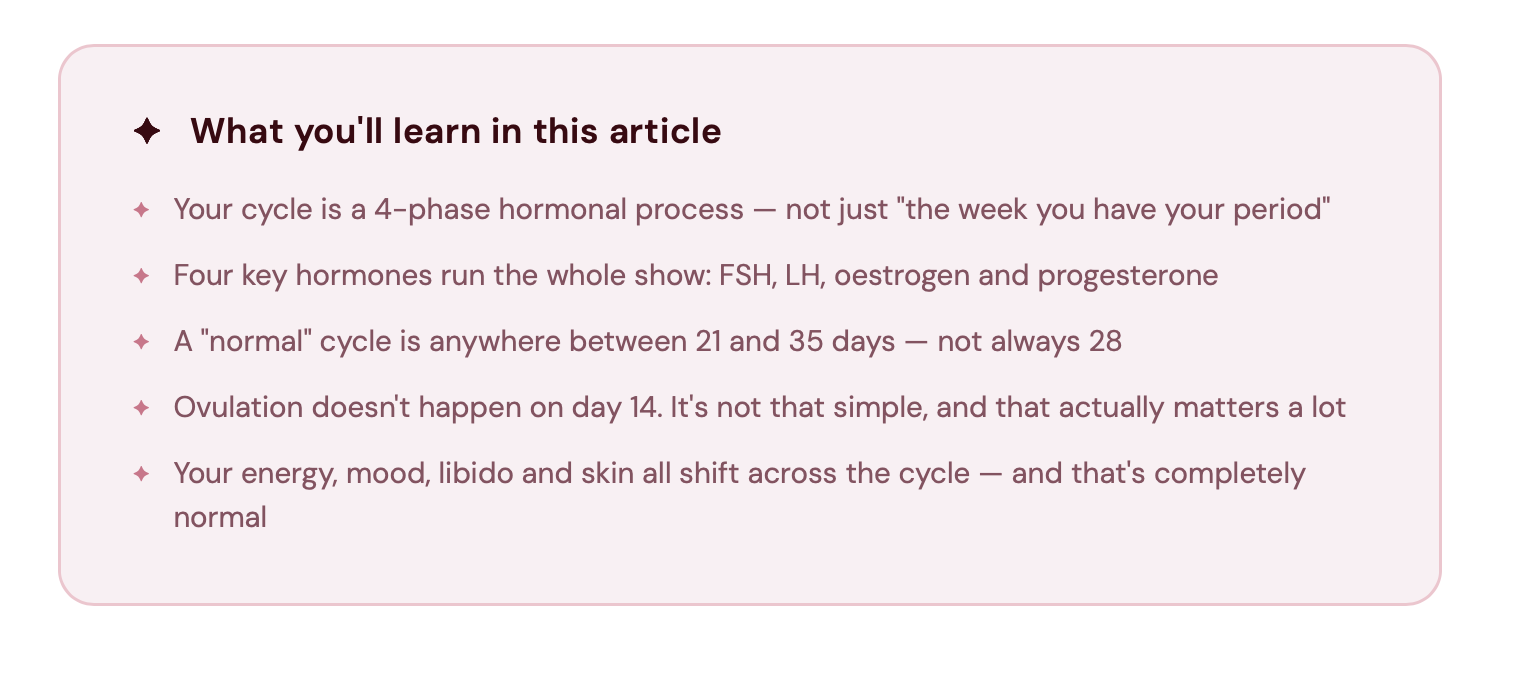
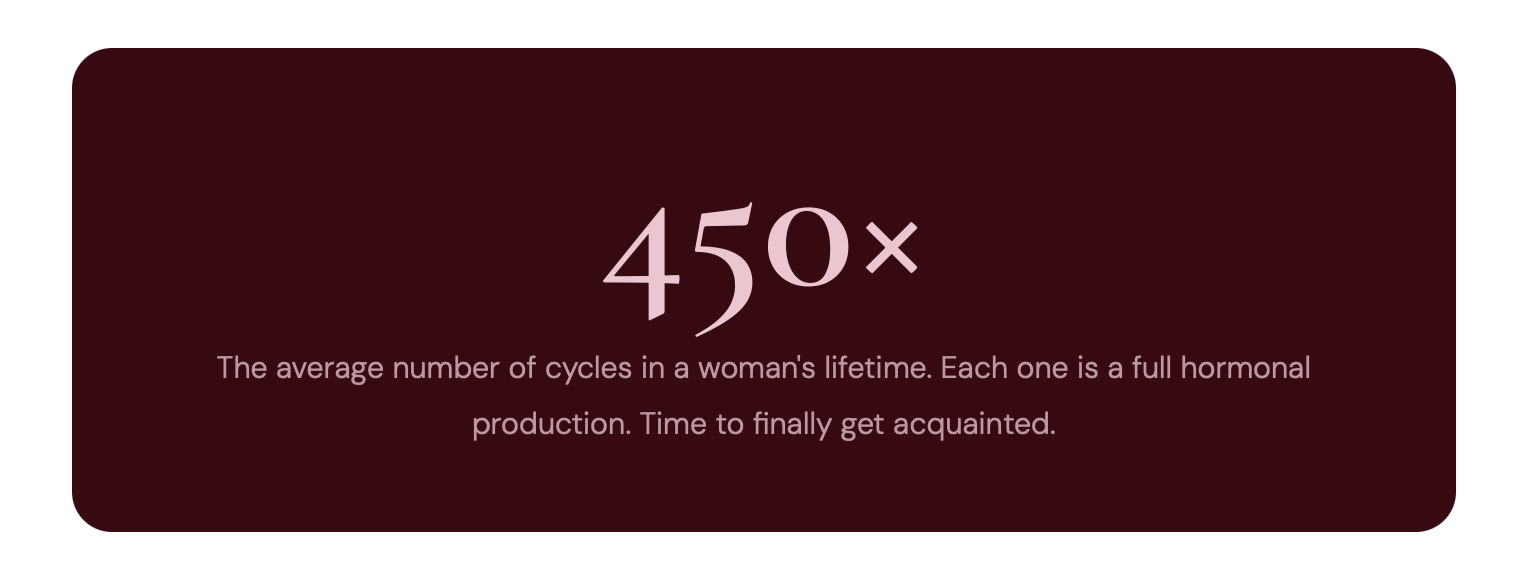
Between the ages of around 12 and 52, the average woman has her period roughly 450 times. That's a lot of cycles !
And yet most of us were never really taught what's actually happening — just that it arrives, it hurts, and then it leaves.
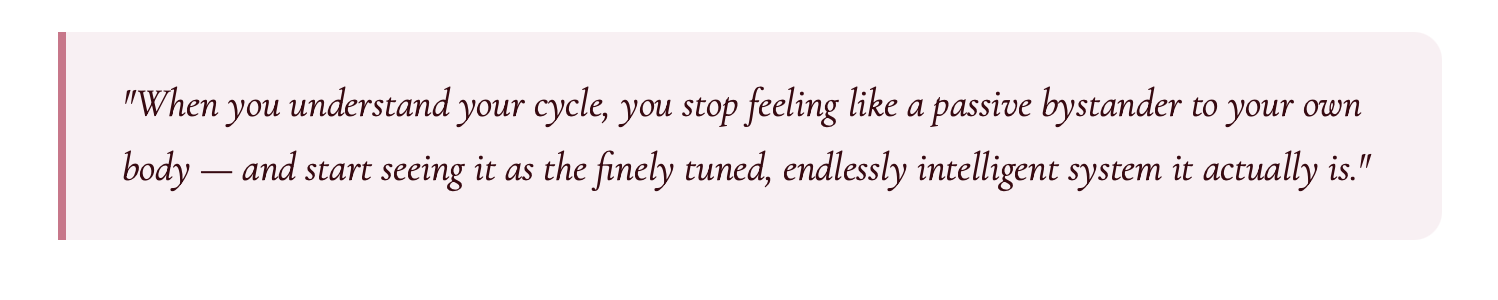
Here's the thing: your menstrual cycle isn't just about periods. It's a beautifully complex monthly process designed to prepare your body for pregnancy — and whether you want children or not, understanding it can genuinely change how you relate to your body, your energy and your emotions.
Men are fertile essentially every single day from puberty until old age, with no hormonal coordination required. Women, on the other hand, can only conceive during a short fertility window each month — thanks to a precise hormonal dialogue between the brain and the ovaries. That's remarkable, not inconvenient.
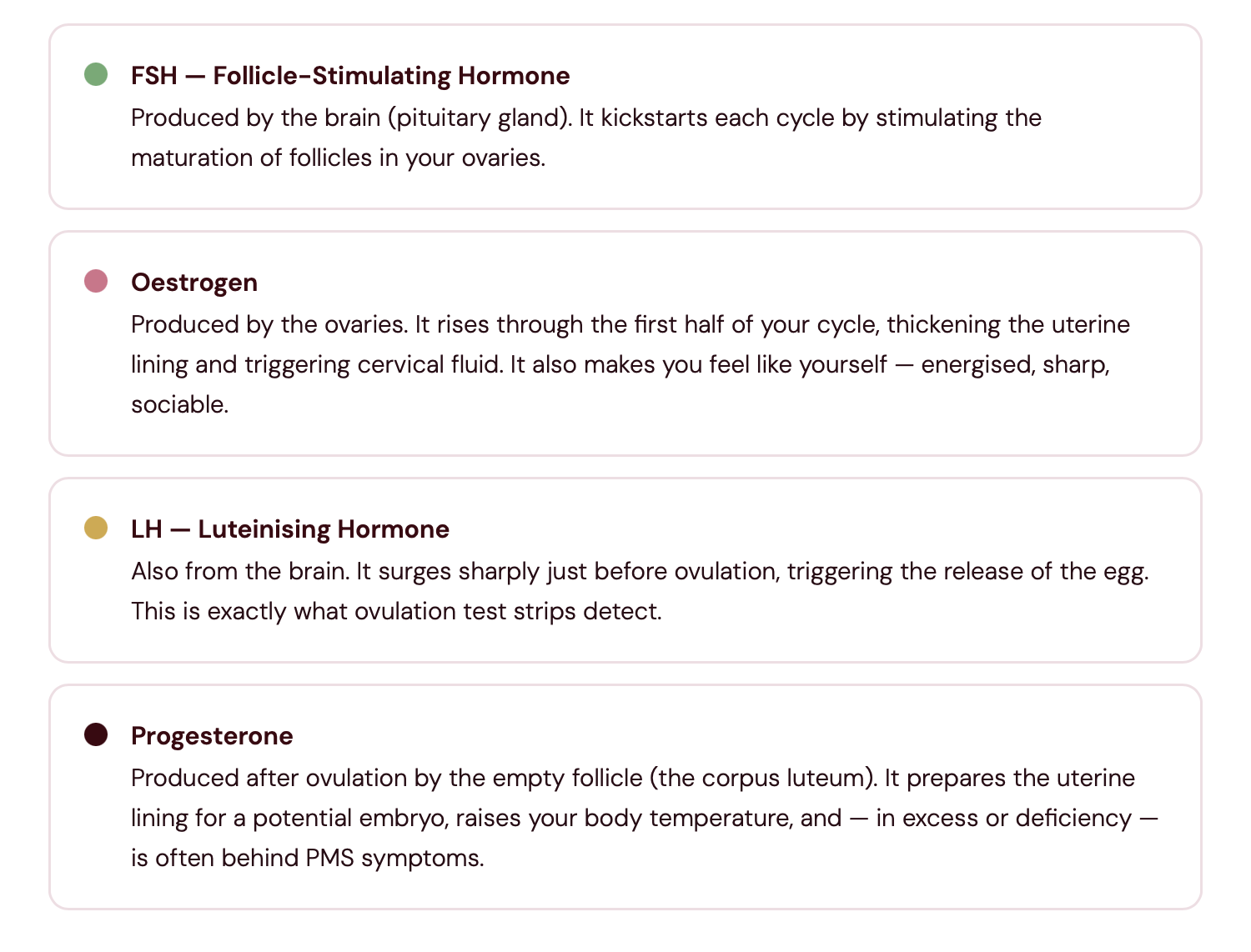
The four hormones running the show
Your cycle is orchestrated by four main hormones — two produced by the brain, two by the ovaries. They talk to each other all month long.
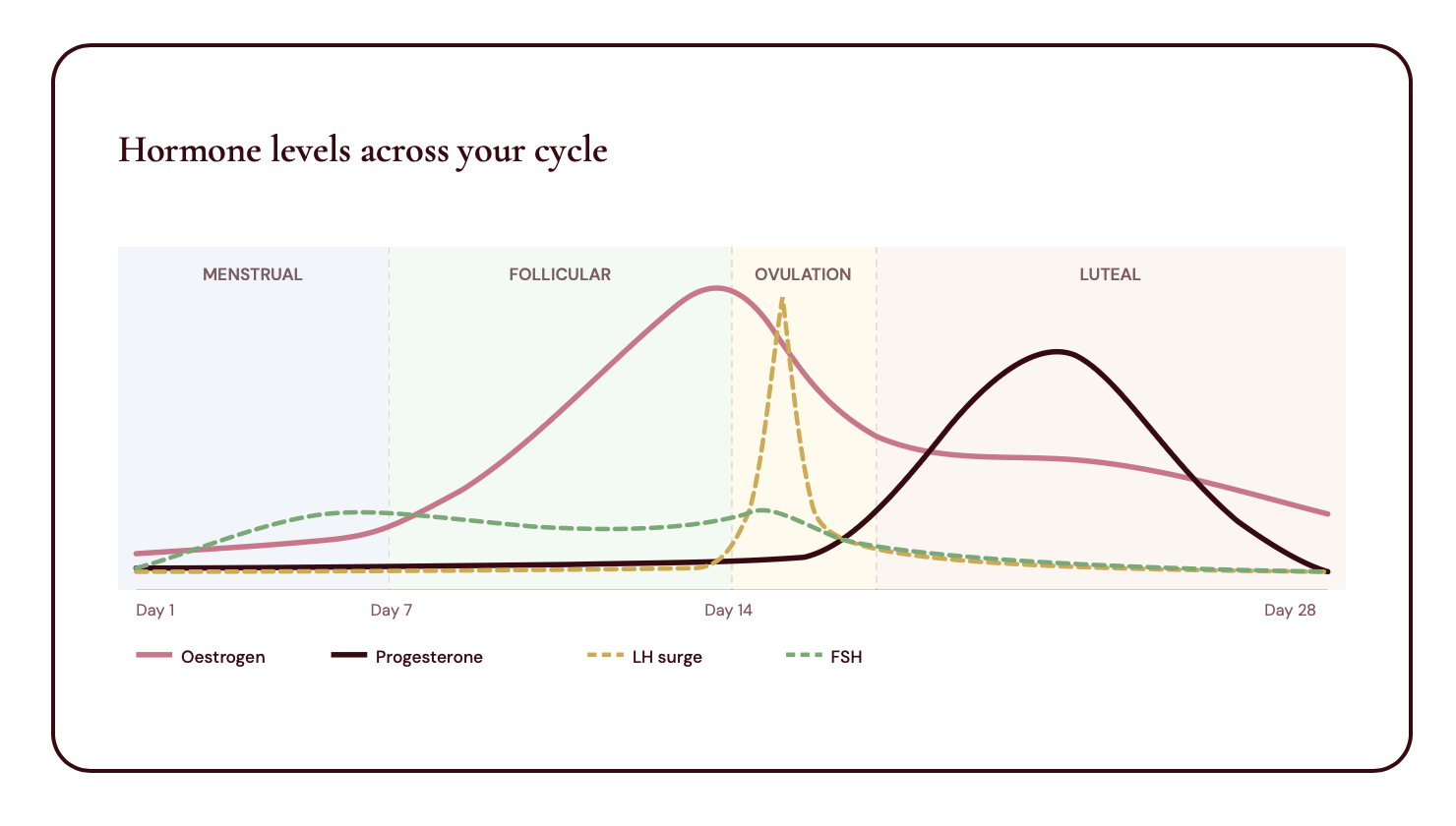
The four phases — your cycle's four seasons
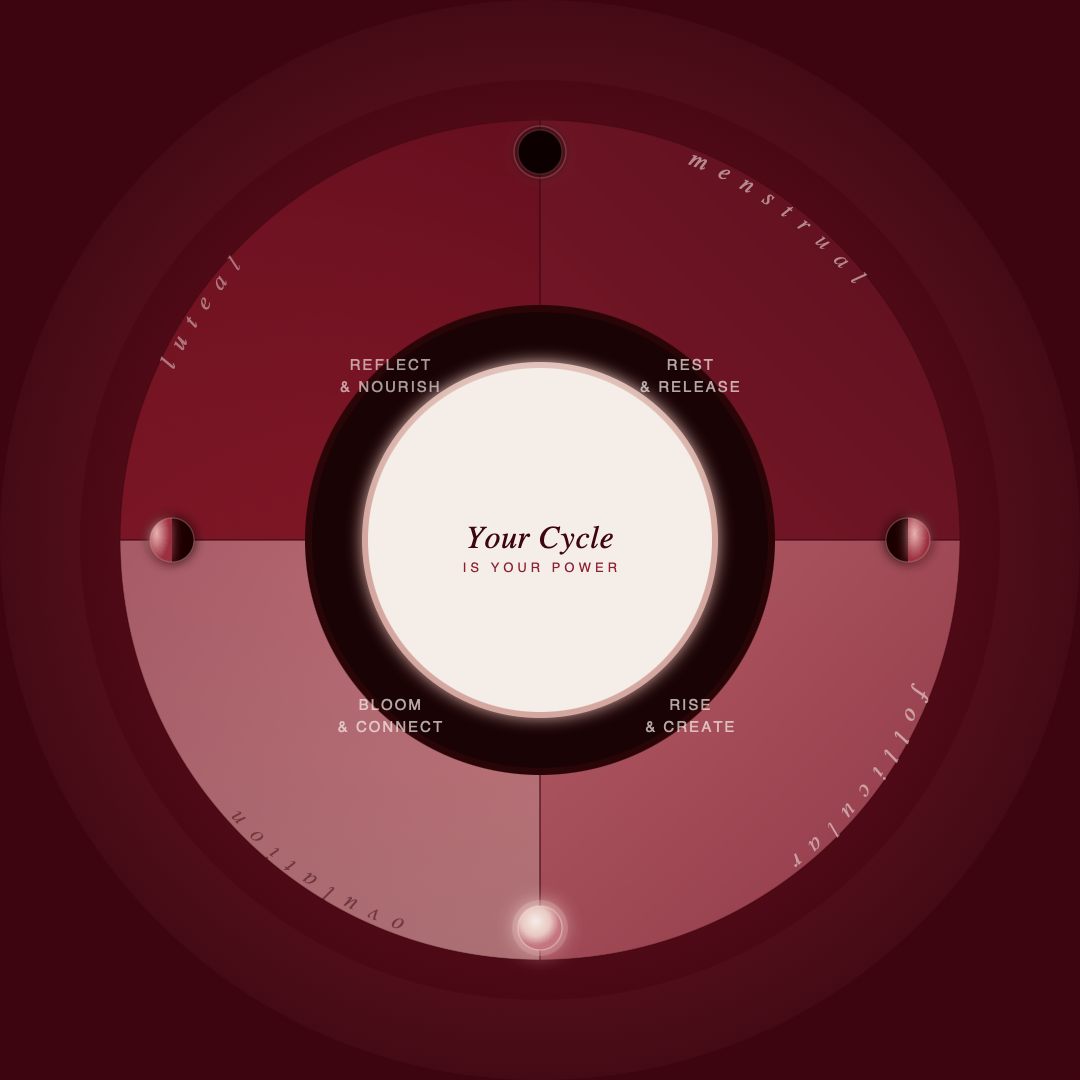
Your cycle unfolds across four distinct phases. We like to think of them as seasons — because just like in nature, each one has its own energy, its own purpose, and its own feel.
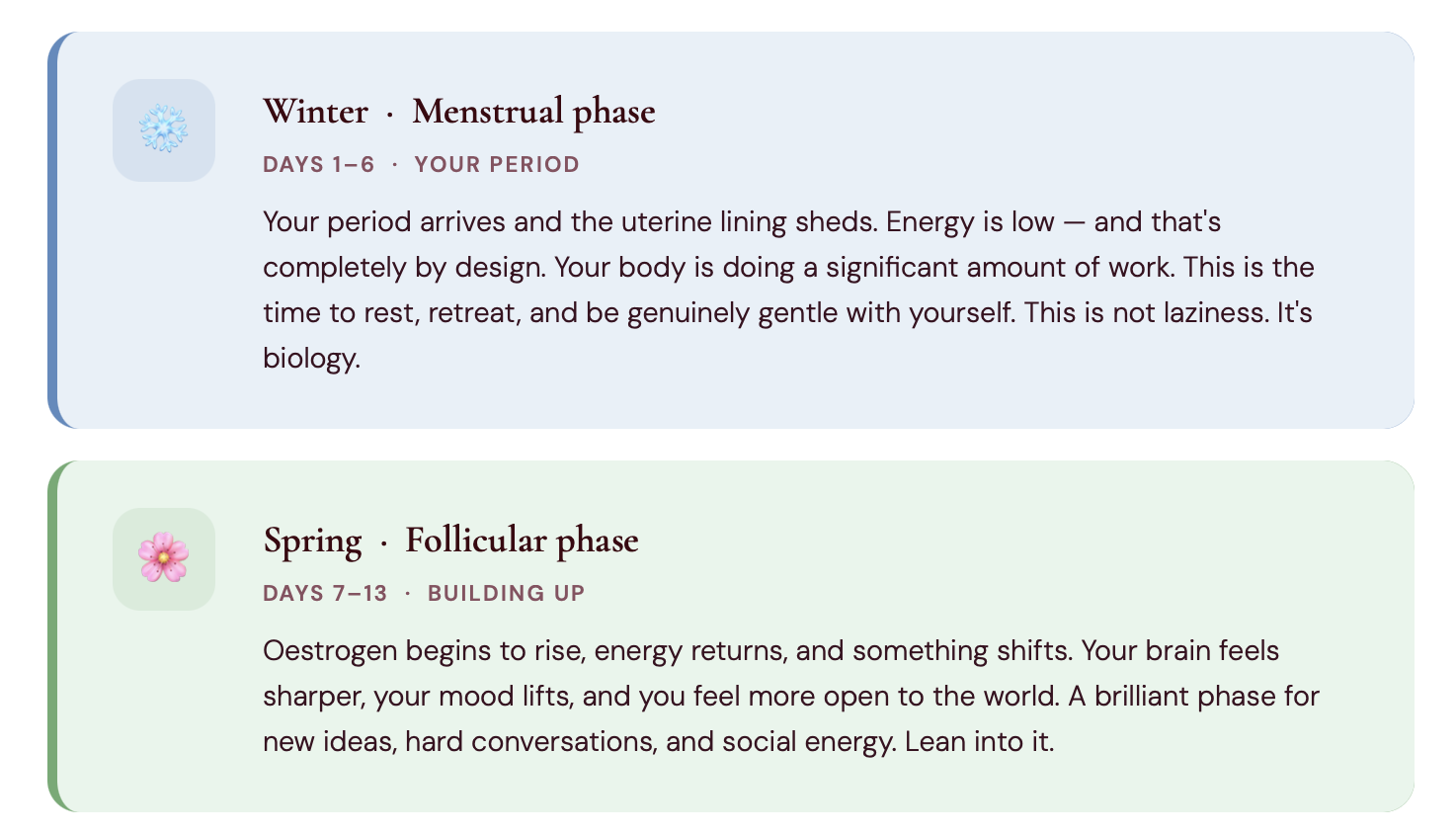
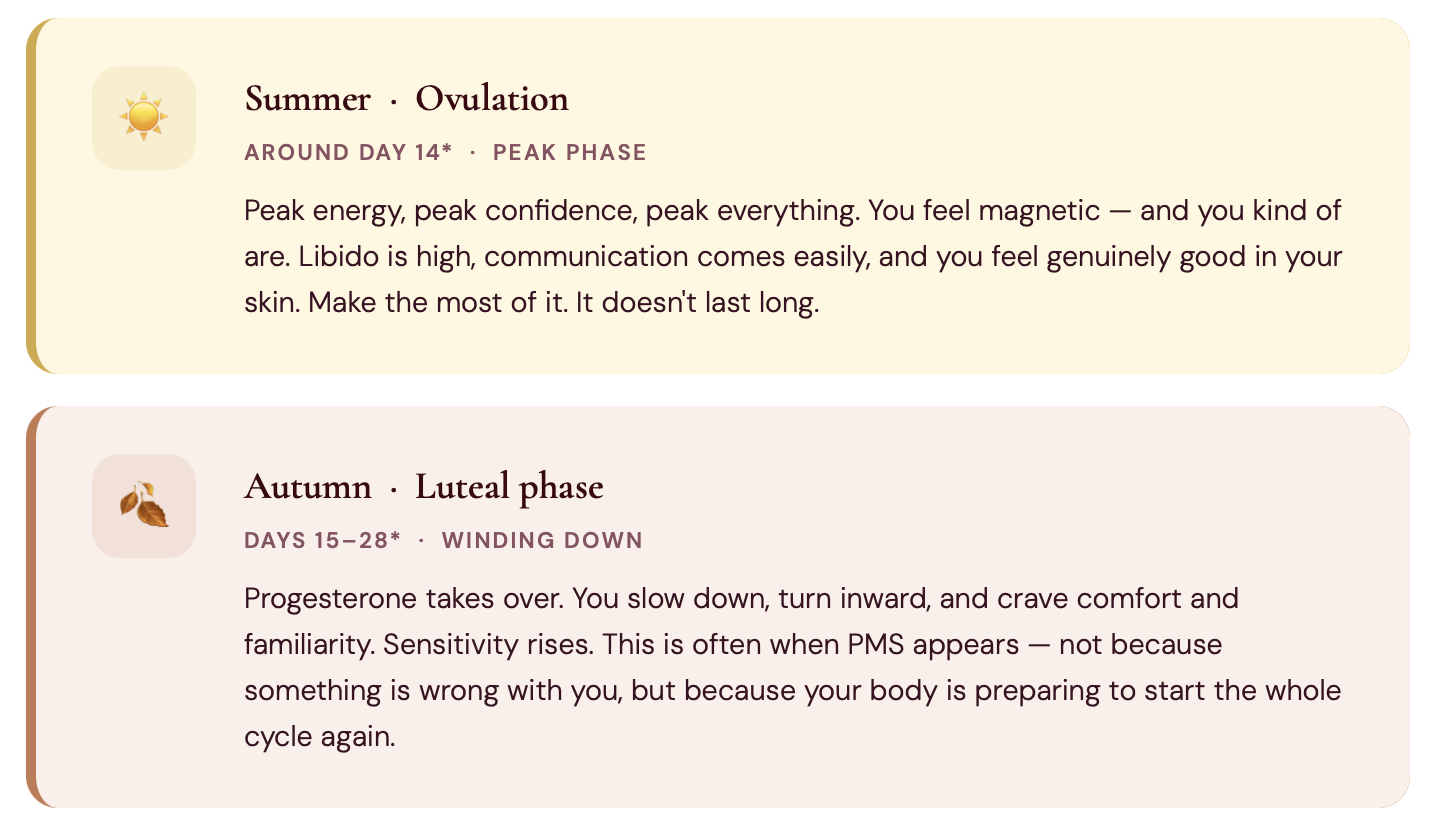
* These are rough guides — your ovulation and cycle length day vary.
So what actually triggers your period?
Your period isn't the start of something — it's actually the end result of the previous cycle. When the egg released during ovulation isn't fertilised, the corpus luteum (the empty follicle) stops producing progesterone. Without progesterone, the uterine lining has no reason to stay, and it sheds. That shedding is your period.
In other words: no ovulation, no real period. The bleeding you get on the pill isn't a period — it's a withdrawal bleed caused by the drop in synthetic hormones.
Periods last between 2 and 8 days. The actual blood loss is only around 40–80ml — about 2–3 tablespoons. If yours is significantly heavier, more painful than you can manage, or if you're dreading it every month — that's worth talking to a health practitioner about it.
Debilitating periods are not something you just have to live with.