- Mar 13
Ovulation : myths, reality & everything in between that you must know
- Shabina
- Menstrual Cycle, Fertility
- 0 comments
When it comes to having a baby, there are two essential ingredients: the right partner, and the right timing.
We'll trust you on the first one — but we know the second isn't always obvious.
Whether you want to encourage or avoid a pregnancy, knowing your ovulation window is essential. How many women believe they're struggling to conceive when they've simply never identified their fertile window?
When that window spans only a matter of days per cycle, the margin for error is very small.
What is ovulation, exactly?
Ovulation is often described as being the third main phase of the menstrual cycle — the phase we compare to summer.
The cycle begins on day 1 of your period (the pre-ovulatory or follicular phase), then comes ovulation, then the post-ovulatory phase (the luteal phase).
More precisely, ovulation is the precise moment when an egg is released from one of your ovaries into the nearest fallopian tube, where it can potentially meet a sperm and be fertilised. It happens approximately once per month, from puberty to menopause.
Here's something most people don't realise: your eggs are not created each month. You were born with all of them — between 300,000 and 400,000 eggs stored in your ovaries. Each cycle, a group of follicles is recruited and begins to mature under the influence of hormones. Only one will be selected to ovulate. The rest are reabsorbed.
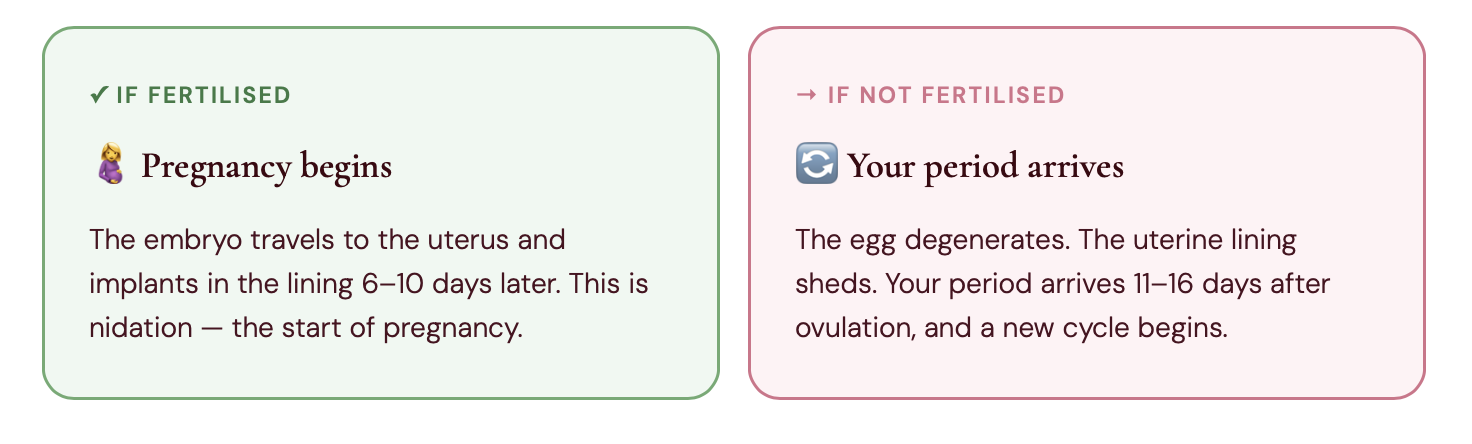
After the egg is released, two things can happen:
Ovulation vs. your fertility window —(spoiler alert : they are not the same thing)
This is one of the most important distinctions in all of cycle education — and one of the most commonly confused. The moment of ovulation and your fertility window are very different things.
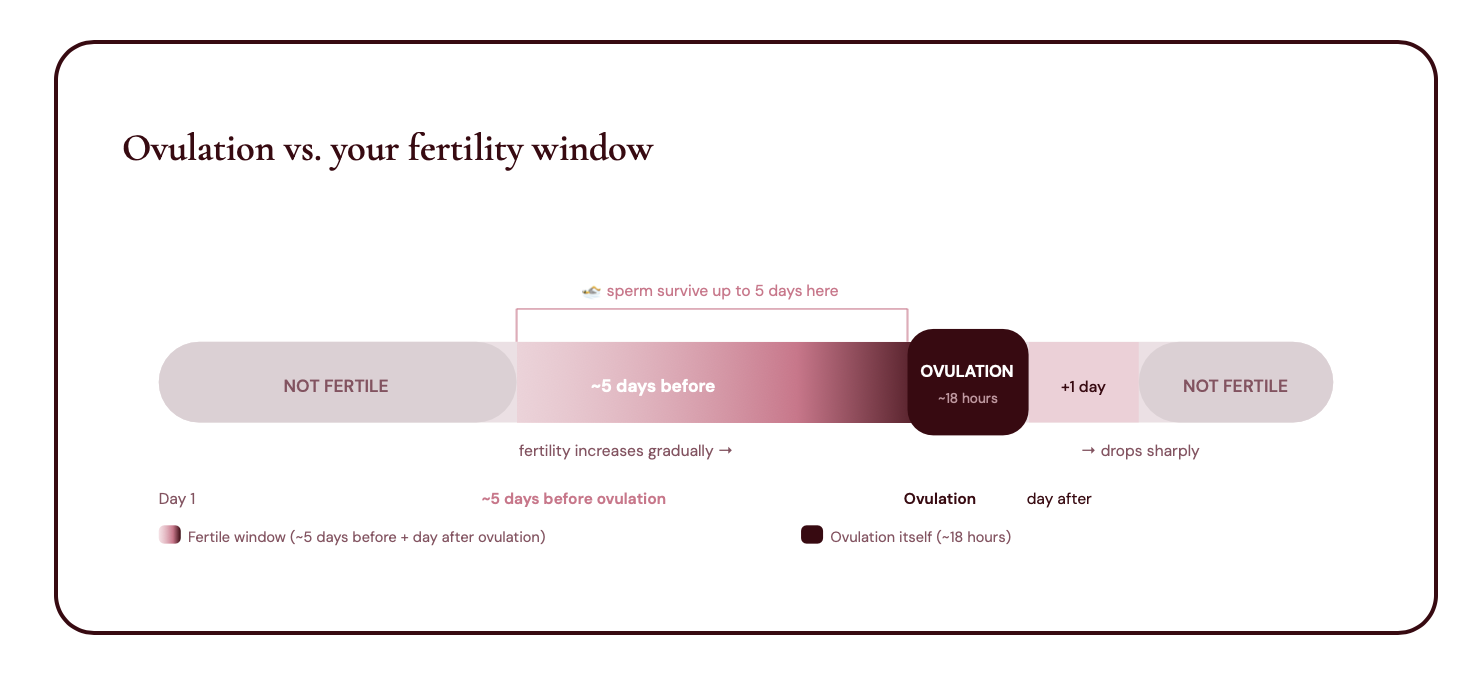
Ovulation = the precise moment the egg is released. It lasts approximately 18 hours.
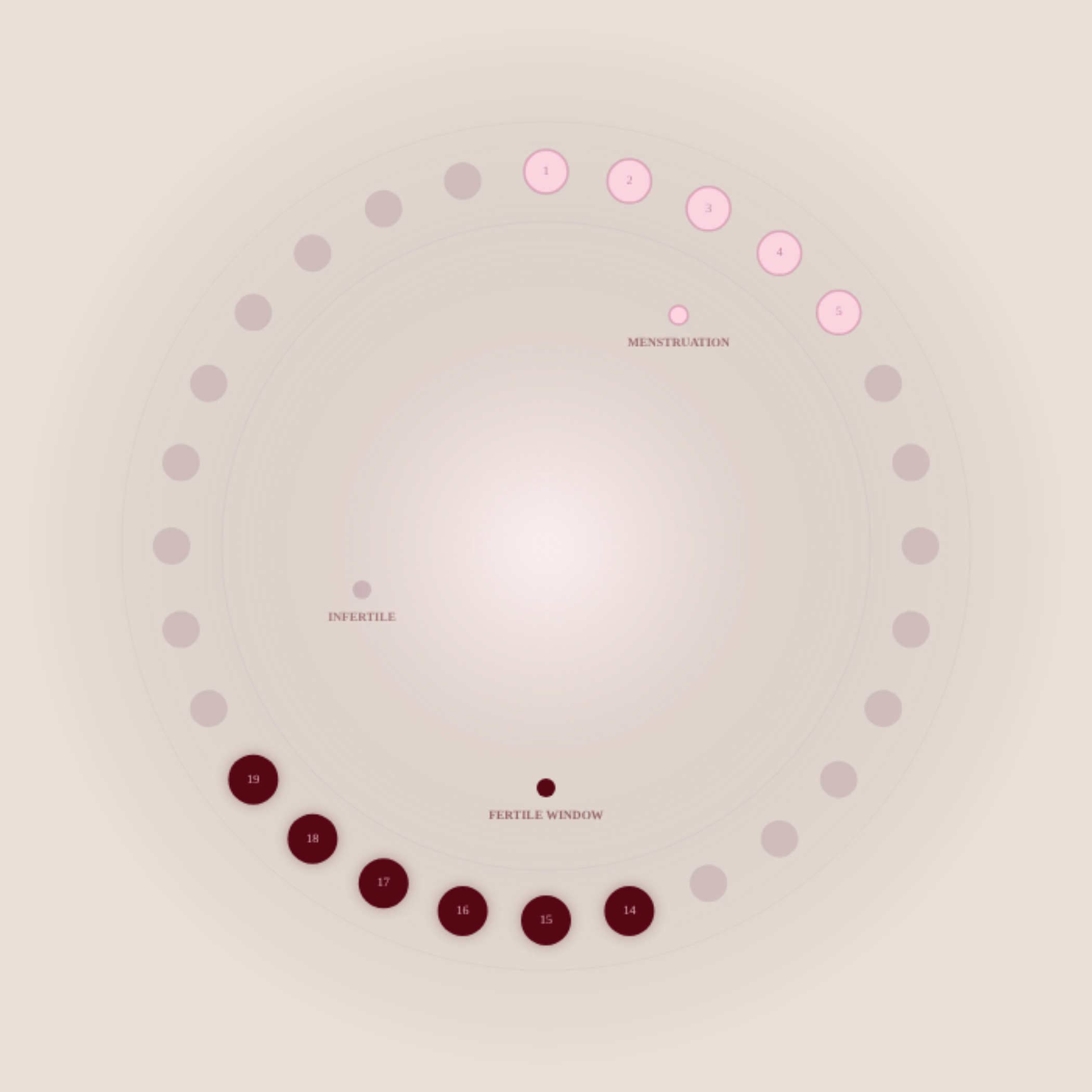
Your fertility window = the full period during which pregnancy is possible. It spans around 5 days before ovulation, plus the day after.
How is that possible? The fertility window is the sum of both partners' gamete lifespans:
🥚 The egg lives for around 18 hours — very short.
🏊 But sperm can survive for up to 5 days in the presence of cervical mucus, which nourishes and protects them, guiding them toward the egg.
So: you are fertile for approximately 5 days before ovulation (thanks to sperm survival in cervical mucus) and the day after (thanks to the egg's own lifespan). Fertility rises gradually across those 5 days, then drops sharply on the day after ovulation. It's essential to distinguish between the moment of ovulation (18 hours maximum) and the fertile period (around 5 days before + the day after).
Well-timed sexual intercourse during this window gives approximately 25% chance of pregnancy under 25, and around 20% in your thirties. Lower than most people expect — which is why knowing your actual window matters so much, whether you're trying to conceive or to avoid it.
When does ovulation actually happen?
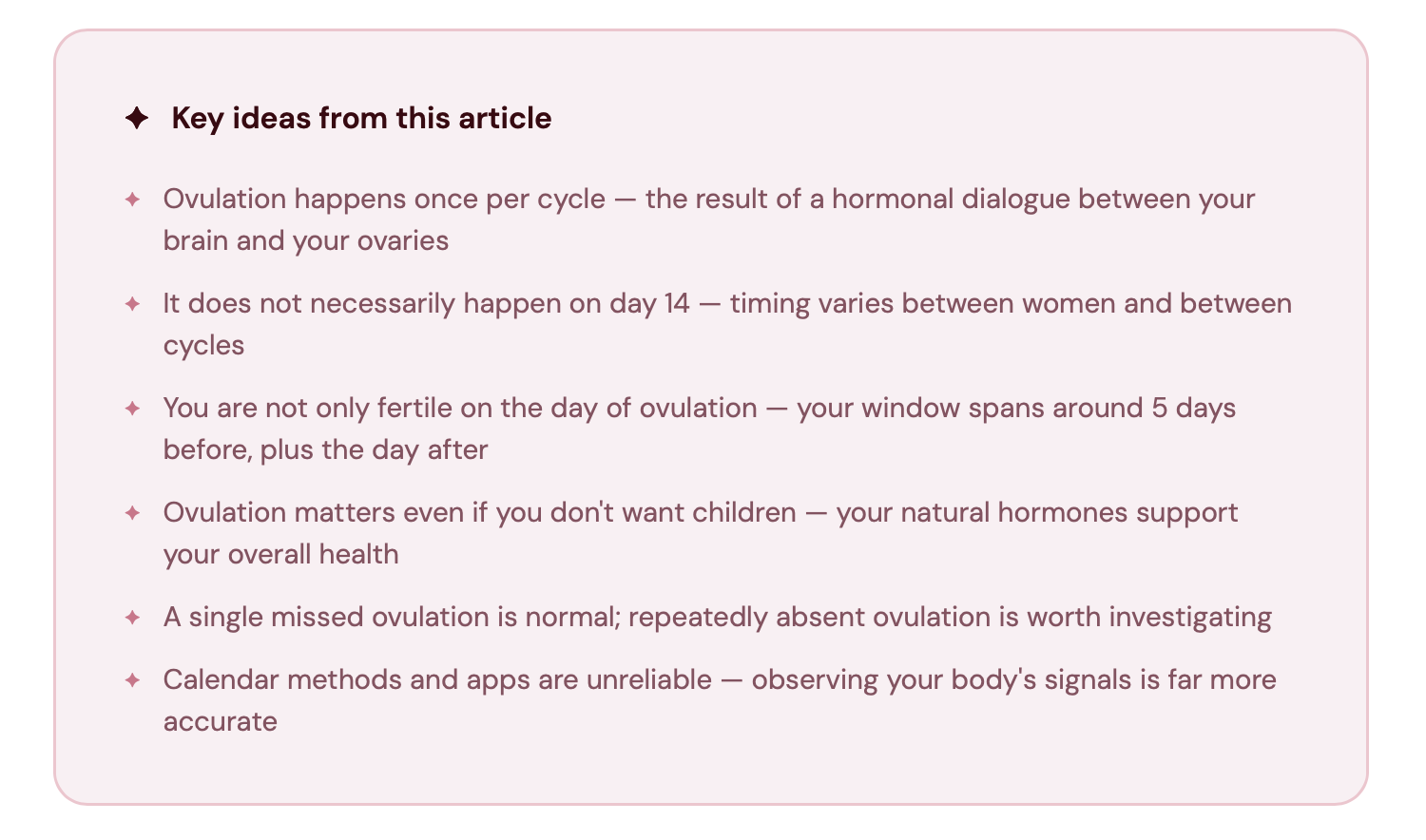
Since secondary school, we've been told ovulation happens on day 14. Let's correct that immediately: it is simply not true for most women.
Ovulation can happen earlier or later — depending on the woman and the cycle. Its timing can shift by several days in response to stress, a cold, jet lag, a change in sleep, a new diet, or a change in routine. That's completely normal. Having regularly late ovulation is not necessarily a sign of a fertility problem.
And no — it doesn't happen "14 days before your next period" either. The post-ovulatory (luteal) phase can last between 11 and 16 days. It can even be shorter than 11 days in cases of progesterone insufficiency. Neither end of the equation is fixed.
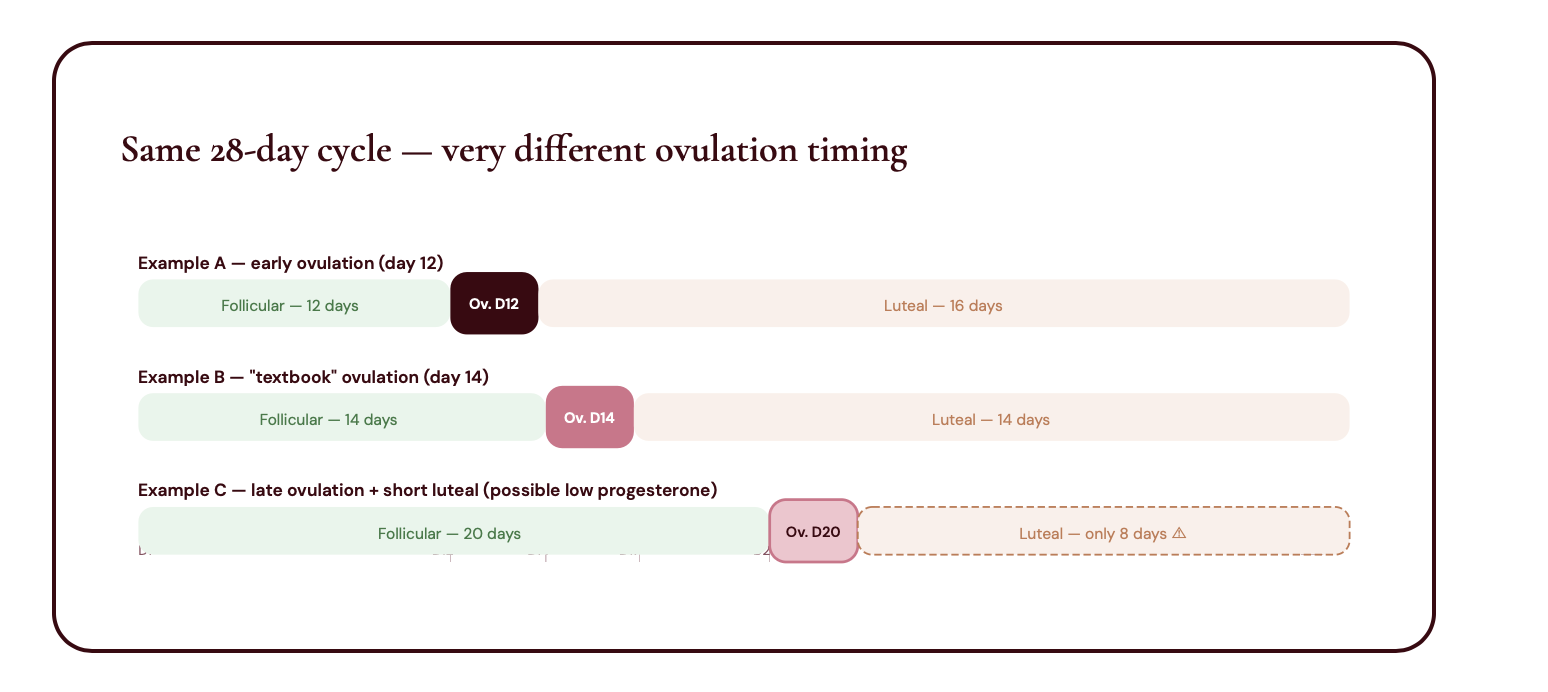
Even on an apparently "regular" 28-day cycle, the actual ovulation date can vary enormously. A woman with a 28-day cycle can ovulate as early as day 12 or as late as day 20 — and all combinations are possible. Getting this wrong costs you, whether you're trying to conceive or trying to avoid it.

Where the day-14 myth comes from ?
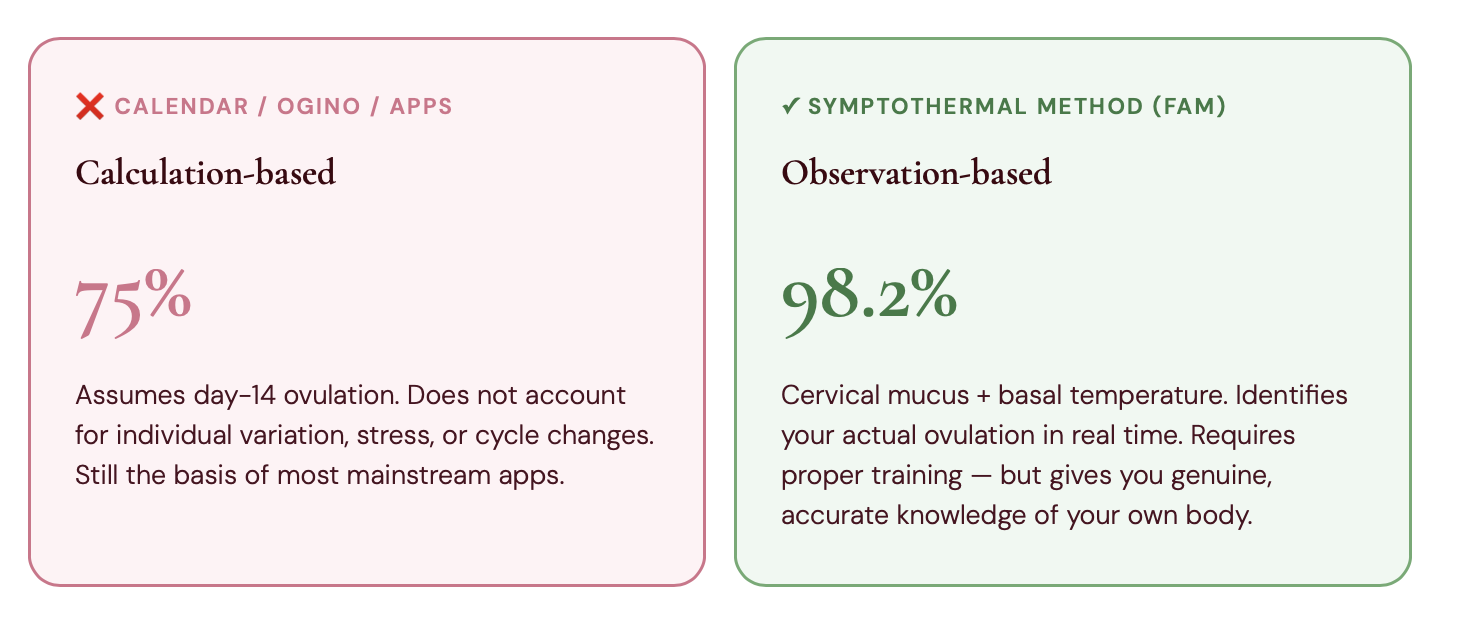
Both of these faulty assumptions — "14 days after your period starts" and "14 days before your next period" — come from the same source: the Ogino calendar method, declared obsolete by modern science. Its practical reliability rate is only 75%. And yet this is precisely what most cycle-tracking apps are still built on today.
The signs your body sends you
Unless you're as reliable as a Swiss watch — and even then, stress, jet lag, a change in habits or a new diet can temporarily throw things off — it is simply not possible to predictyour ovulation date through calculations alone.
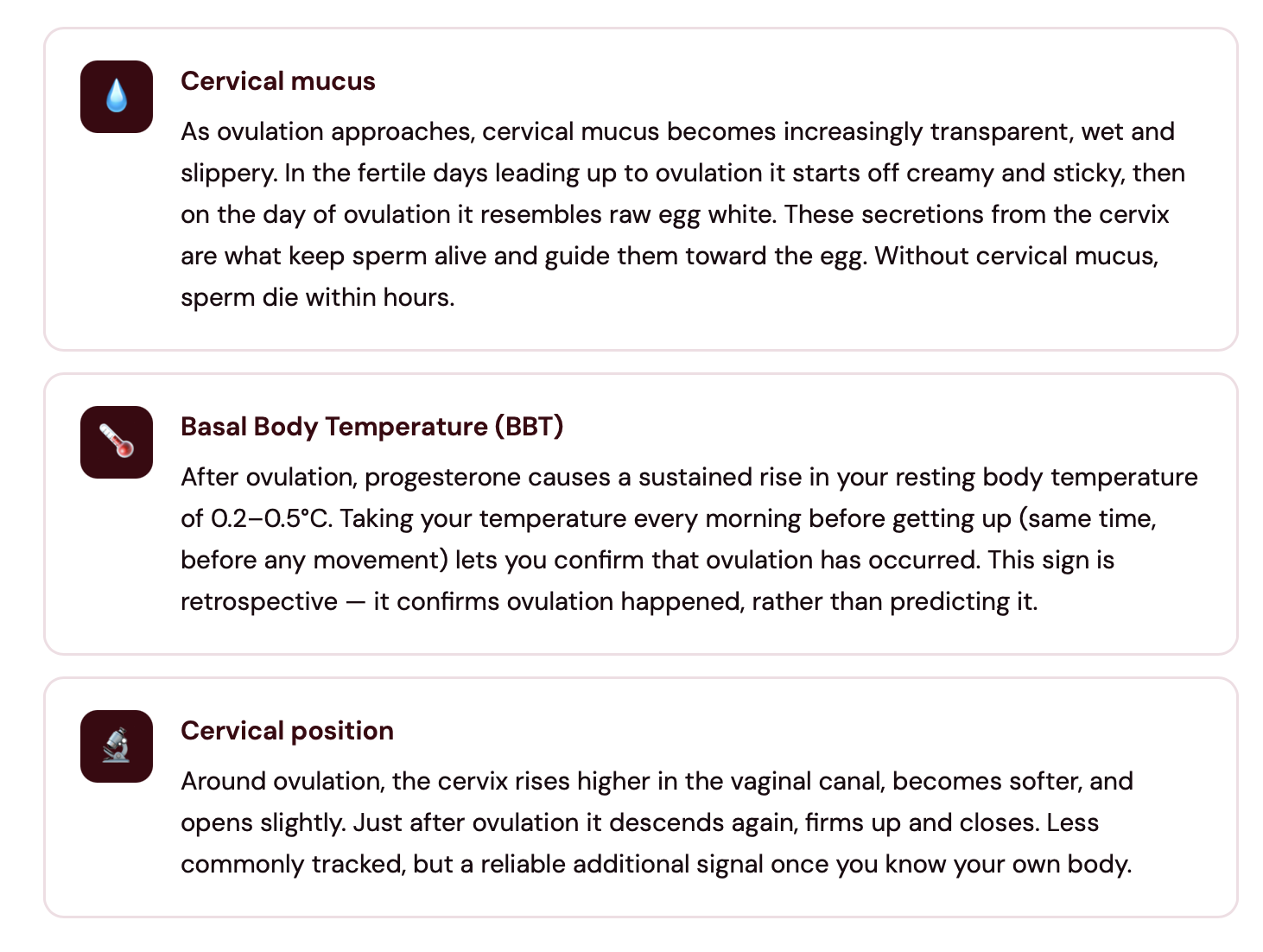
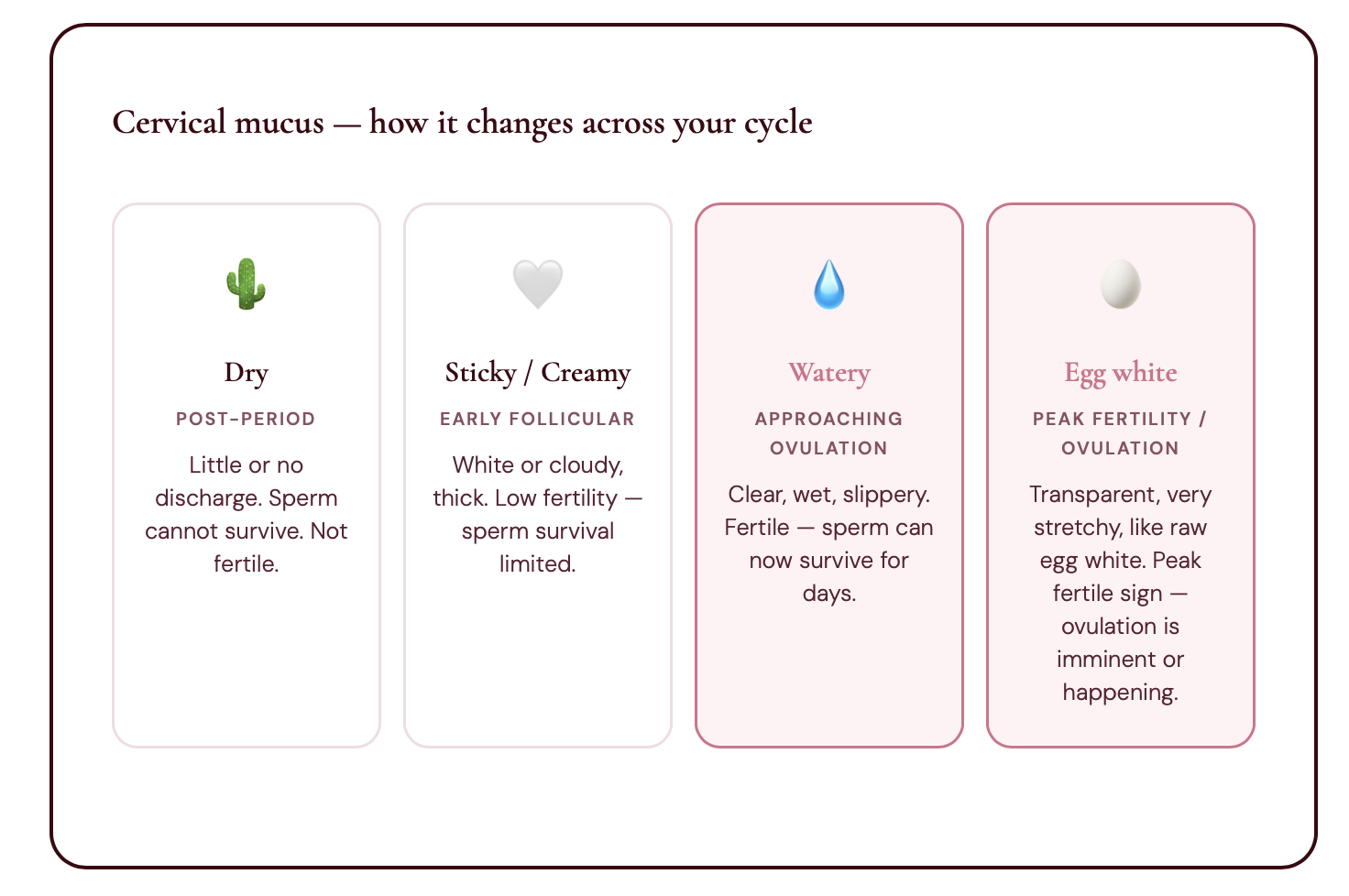
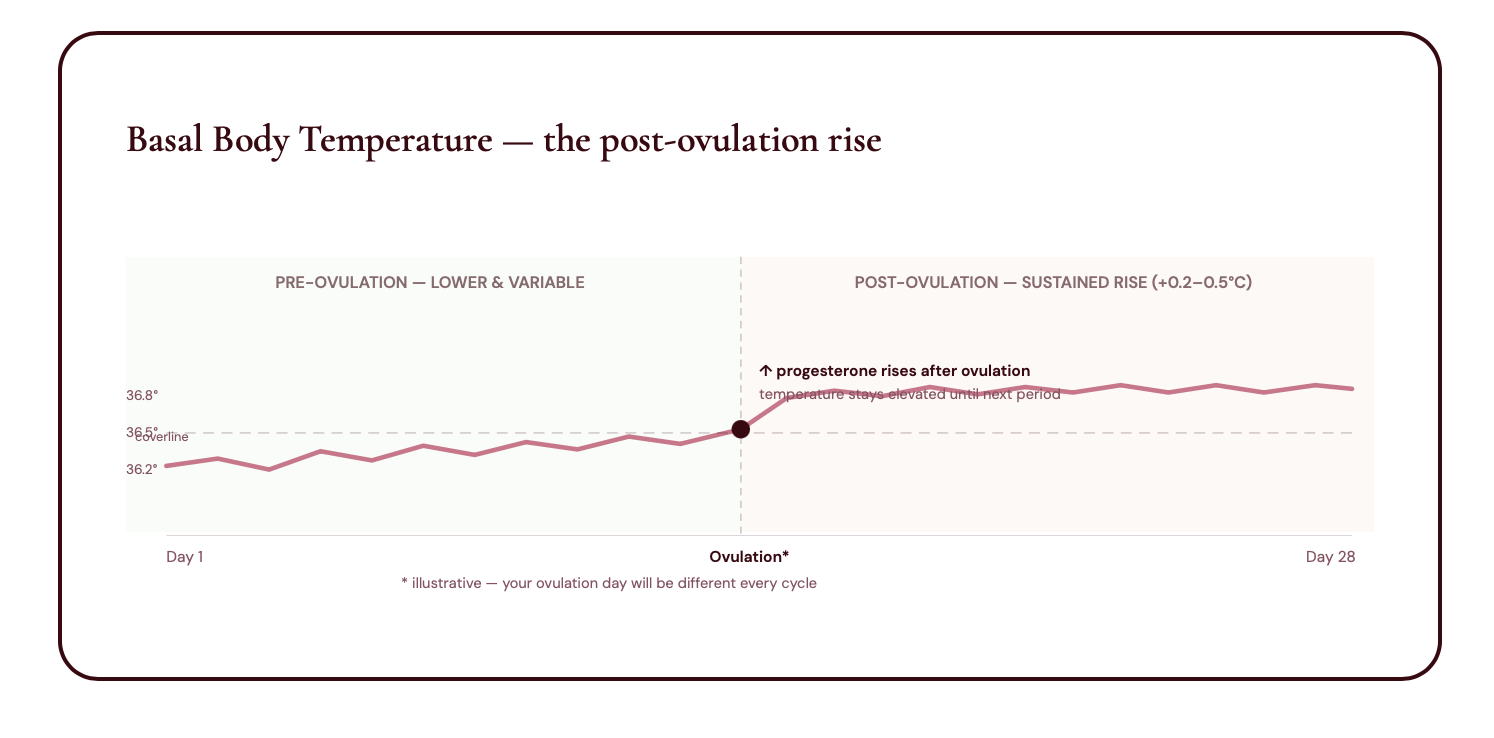
But here's the crucial nuance: ovulation can't be predicted, but it can be detected. Your body sends clear, observable signals in the days before and during ovulation. You just need to know what to look for. This is the entire foundation of natural contraception methods — they allow women to identify, day by day, whether or not they are fertile.
The three primary biomarkers :
Secondary signs — useful clues, not standalone evidence
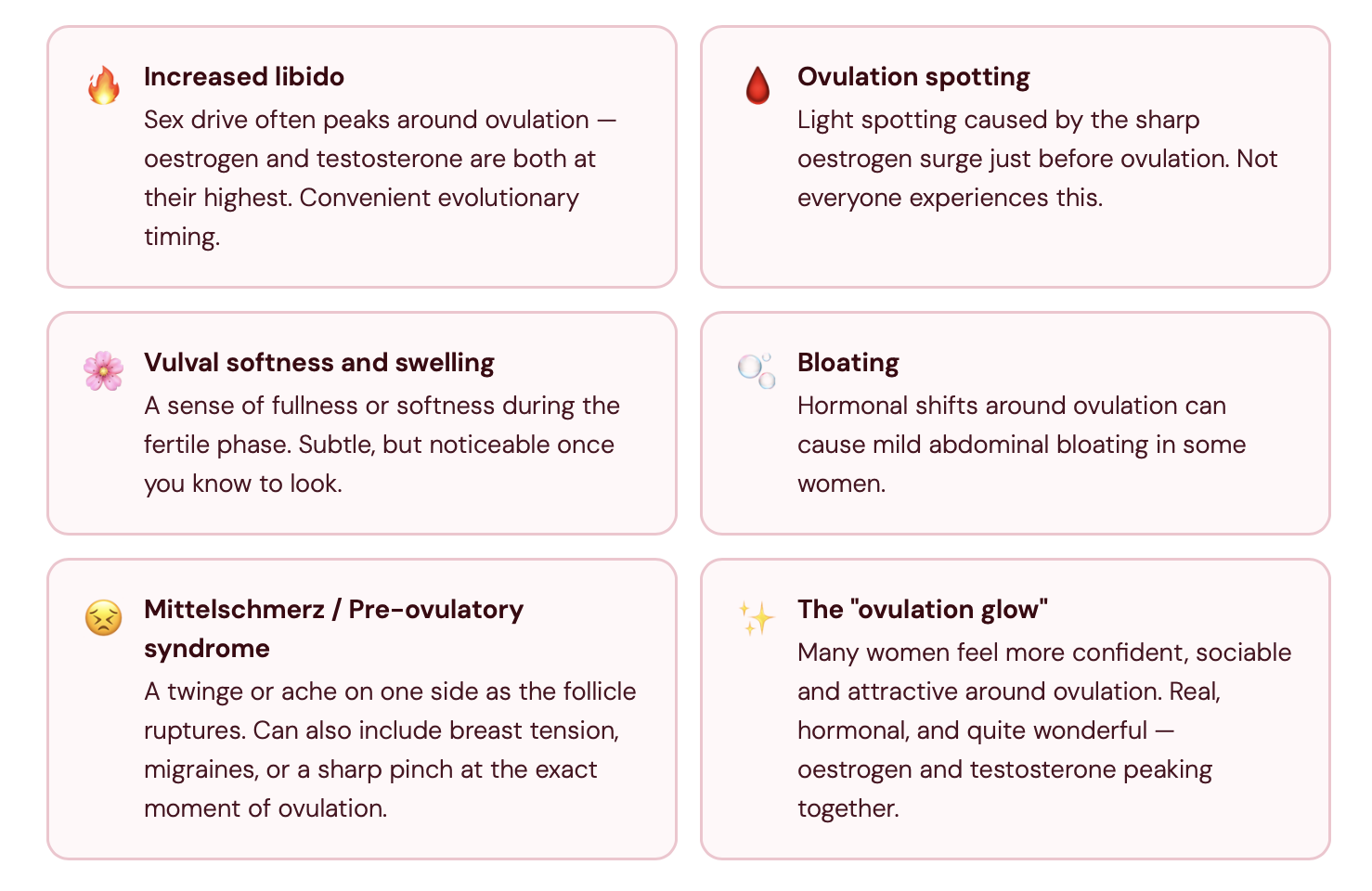
These signals can support your observations, but should never be used alone to manage fertility:
How to identify your ovulation date ?
Calendar methods and apps
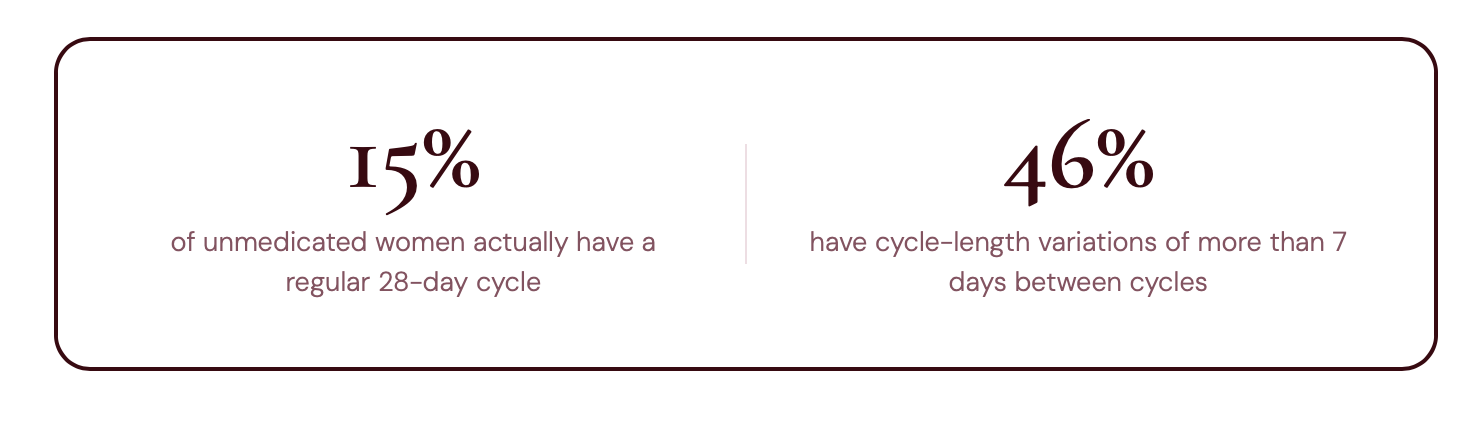
If you're using a calendar or an ovulation calculator, proceed with extreme caution — they are built on the Ogino method. Given that only 15% of women have a truly regular 28-day cycle and 46% experience variations of more than 7 days, it is neither realistic nor safe to rely on a calculator, especially if you want to avoid pregnancy. Only day-by-day observation is reliable. And the good news is — that is entirely possible.
Ovulation test strips
Ovulation tests detect the LH surge in your urine — the hormone that spikes just before ovulation. When detected, ovulation should in theory follow around 16 hours later. But in theory only. The surge doesn't always lead to successful ovulation. And women with PCOS, for example, can have consistently positive tests without ever ovulating. Test strips can be a useful supplement, but they have real limitations.
Symptothermal methods — the reliable approach
For a genuinely accurate picture, the most reliable approach combines cervical mucus observation with basal body temperature. This is symptothermy (or the Fertility Awareness Method, FAM). After ovulation, basal temperature rises by approximately 0.3°C — and when combined with mucus charting, this method has a reliability rate of 98.2%. It does require proper training to apply accurately — think of it like a driving licence for your cycle.
Ovulation as a vital sign
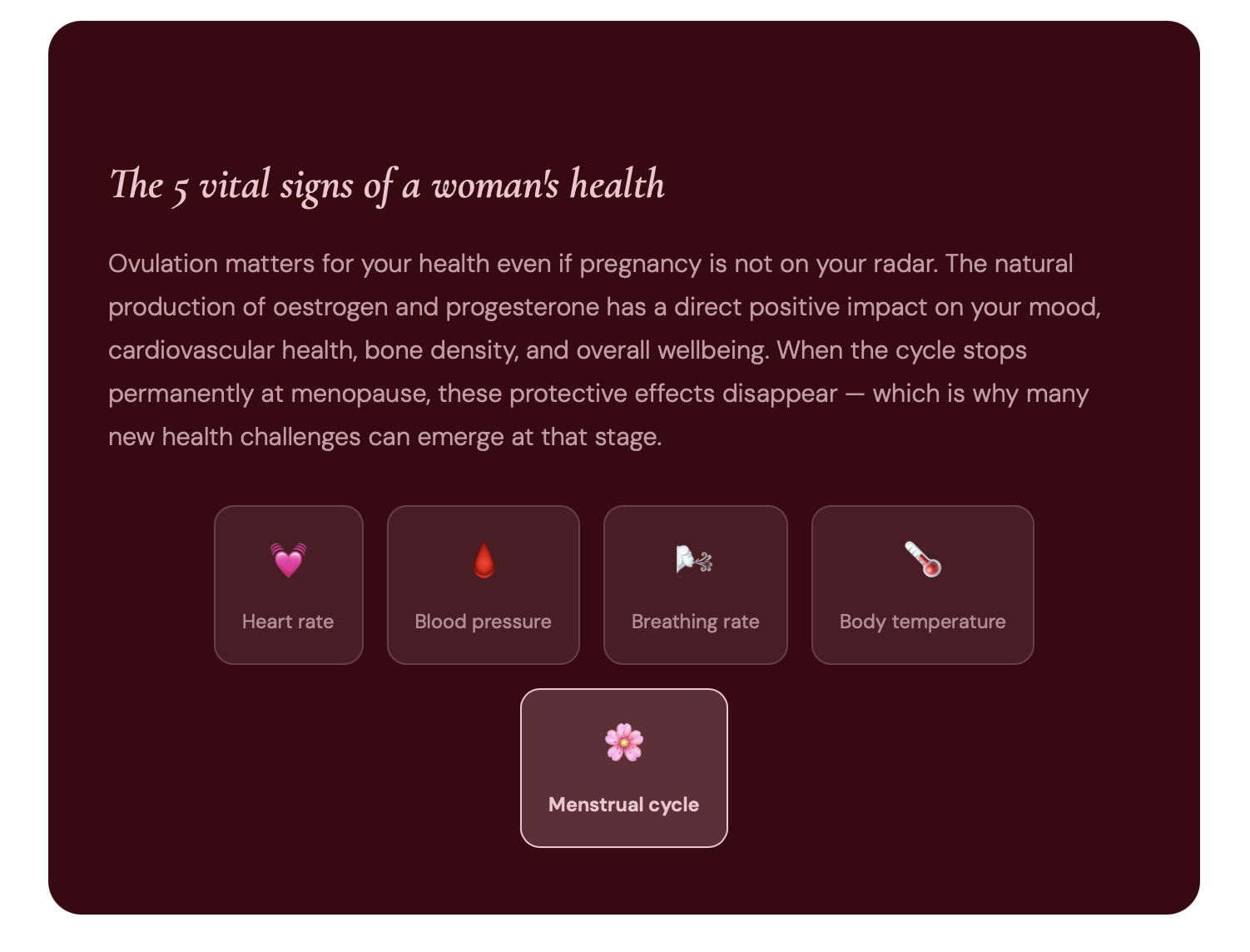
According to the American College of Obstetricians and Gynecologists, the menstrual cycle — and therefore ovulation — should be considered a vital sign of women's health, on a par with blood pressure, heart rate, respiratory rate and body temperature.
When ovulation doesn't happen — anovulation
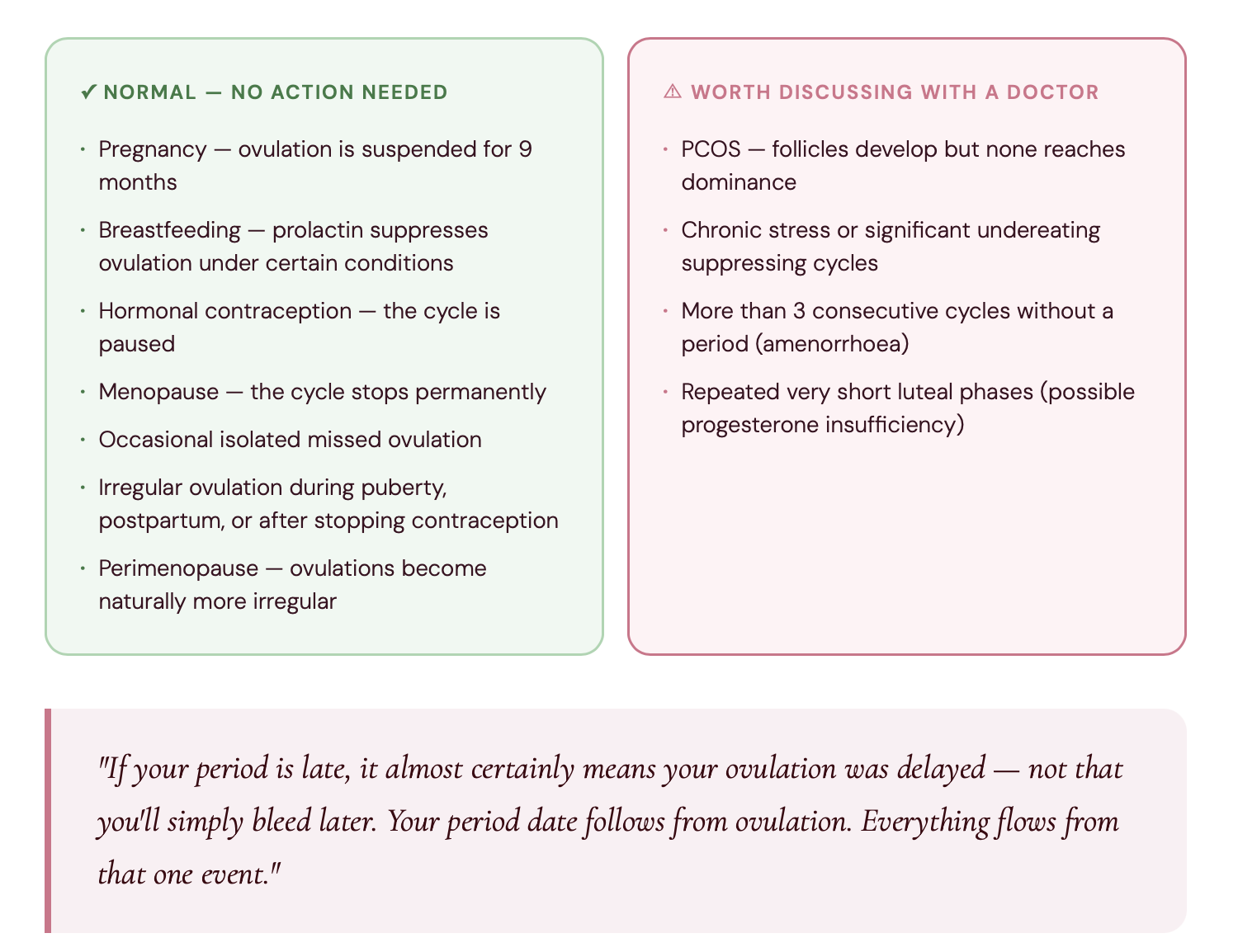
It's entirely possible for an ovulation to simply not occur in a given cycle. This is common, happens to everyone occasionally, and is not cause for concern on its own. A delayed or missing ovulation triggered by stress, illness or a lifestyle change is very normal.
It becomes worth investigating when ovulation is repeatedly absent — because without ovulation there is no progesterone, no true period, and potentially a cause of infertility. This can be the case for women with PCOS (Polycystic Ovary Syndrome), for example.